
For homeowners across Oakville and the surrounding Halton Region, having access to handyman support that spans appliance repair and minor electrical work means fewer separate contractors to coordinate for a list of mixed jobs.
A broken oven has a way of making its presence known at the worst possible time — usually the evening before a dinner you were counting on. Whether it's an oven that won't heat up, a burner that sparks without lighting, or a door that's stopped sealing properly, oven repair in Oakville is one of the more common appliance calls homeowners deal with throughout the year. The good news is that most oven problems are fixable without replacing the appliance entirely.
Oakville homes run a wide mix of appliances — older gas ranges in detached homes along Lakeshore Road, newer electric and induction units in condos near the Uptown Core, and mid-range stacked kitchen setups in townhomes throughout River Oaks and College Park. Each type comes with its own set of failure points and diagnostic steps. The issue is rarely as catastrophic as it first appears.
Handyman Oakville Ontario – Home Repairs & Installations
Handyman Oakville Ontario handles residential appliance repair for homeowners across Oakville and surrounding communities in the Halton Region. If your oven is giving you trouble, getting a clear diagnosis early is what separates a manageable repair from a complete replacement down the road.
The first thing most homeowners do when an oven stops working properly is assume the worst. In practice, a lot of oven complaints come down to maintenance issues that have been building up unnoticed. Understanding the difference saves time and money before anyone pulls out a tool.
An oven that heats unevenly — some sections of the rack browning faster than others — is often a calibration issue rather than a failed element. Most modern electric ovens have a temperature calibration offset that can be adjusted through the control panel without any disassembly. This is a simple fix once you know it's available.
A gas oven that lights inconsistently is frequently a dirty igniter or clogged burner port rather than a failed component. Grease and food residue build up over time and interfere with ignition. A proper cleaning of the igniter and burner cap can restore reliable lighting in an afternoon.
Self-cleaning cycles that leave residue or produce excessive smoke are usually a sign of heavy build-up that the cycle can't fully manage in one pass. Running a manual cleaning first and then using the self-clean function tends to give better results and puts less heat stress on the oven's internal components.
An oven door that doesn't close flush is often a worn or cracked door gasket — the rubber seal that runs around the inside edge of the door frame. Replacing a door gasket is a straightforward part swap that restores heat efficiency immediately. In most Oakville homes, this part is orderable and installable in a single visit.
The honest starting point with any oven complaint is a methodical check of the most common causes before assuming a component failure. A lot of service calls that seem serious turn out to be maintenance or minor adjustment issues — which is worth knowing before you decide how to proceed.
In most Oakville homes, the oven problems that come up most frequently follow a recognizable pattern. Knowing what typically causes each symptom helps homeowners describe the issue accurately and understand what the repair is likely to involve.
An oven that won't heat at all — powers on, control panel works, but no heat — is almost always a failed bake element in an electric oven. The bake element is the coil or concealed element at the bottom of the oven cavity. When it fails, it often shows visible burn marks or a break in the element itself. Replacement is a straightforward job involving a few screws and a wiring connection.
For gas ovens that won't heat, the igniter is the first component to check. Gas oven igniters weaken over time and eventually fail to generate enough heat to open the gas valve, even if they still glow. A weak igniter that glows but doesn't light the burner is a common finding — and replacing it typically resolves the issue completely.
An oven control board failure produces more unpredictable symptoms: incorrect temperatures, error codes on the display, functions that work intermittently, or buttons that stop responding. Control board issues are more expensive to repair than element or igniter replacements, which is why a proper diagnosis before ordering parts matters.
Broiler problems — where the broil function doesn't work but the bake function does, or vice versa — usually point to a specific element or a relay on the control board. These are separate components from the main bake element, which is why one function can fail while the other continues working normally.
Temperature accuracy problems — where the oven runs significantly hotter or cooler than the set temperature — can sometimes be calibrated out. If calibration doesn't correct it, the likely cause is a failing oven temperature sensor, which is a straightforward replacement once the diagnosis confirms it.
Gas and electric ovens fail in different ways, and knowing which type you have is the starting point for any diagnosis. Most Oakville detached homes built before 2005 have gas ranges. Newer builds, condos, and many townhomes lean toward electric or smooth-top induction.
Gas oven repairs most commonly involve the igniter, the gas valve, or the burner components. The igniter is by far the most frequently replaced part in a gas oven — they're consumable components that degrade with use. A standard igniter replacement in a conventional gas range is a manageable repair that doesn't require gas line work.
Gas valve replacement is a step up in complexity. If the igniter is confirmed working but the oven still won't light, the gas valve may not be opening properly. This is a repair that requires care and proper handling — many homeowners prefer to have someone experienced manage it rather than attempt it themselves, and that's a reasonable position.
Electric oven repairs center on elements, sensors, and control boards. Elements are the most straightforward and least expensive. A failed bake element in a standard electric oven typically runs to a parts cost that makes repair clearly worthwhile compared to replacement.
Ceramic glass cooktop repairs are a separate category. A cracked glass cooktop from an impact is usually a full surface replacement — the glass itself isn't repairable. A burner that doesn't heat on a smooth-top is usually an element beneath the glass or a relay on the control board, and those are individual component replacements.
One thing that applies to both gas and electric: before calling for a repair, check whether your oven is still under manufacturer warranty. Appliances in Oakville homes purchased within the last year or two may still be covered, which changes the service path. For anything out of warranty, a residential repair visit is typically the most cost-effective next step.
This is the practical question that comes up in almost every appliance service conversation, and the honest answer depends on a few specific factors rather than a general rule.
The starting point is the age of the appliance. An oven under eight years old with a single failed component — a bake element, an igniter, or a temperature sensor — is almost always worth repairing. The cost of the repair is a small fraction of replacement, and the rest of the appliance has usable life remaining.
For ovens between ten and fifteen years old, the calculation shifts slightly. If the component that failed is inexpensive and the rest of the oven is in good shape, repair still makes sense. If the control board has failed on a fifteen-year-old appliance, the repair cost relative to the remaining life of the unit needs to be weighed honestly.
Brand and parts availability matter. For common brands — the major Canadian appliance brands you find in most Oakville kitchens — parts are generally available and affordable. For less common or imported brands, parts can be difficult to source or disproportionately expensive, which changes the repair economics.
The total repair cost matters too. A single element replacement is easy math — it's almost always worth it. A combination of problems on the same appliance — failed element plus a control board issue plus a broken door hinge — starts to approach replacement territory, especially on an older unit.


If you're not sure which direction makes sense, getting a proper diagnosis before making the call is the right move. A service visit that confirms the specific issue and the likely parts cost gives you the information you need to decide. Replacing an oven because of a symptom that turns out to be a $60 part is a frustrating outcome that's easy to avoid.
One additional consideration: if your kitchen is due for a broader update and the oven failure is the trigger, replacement makes more sense in that context. But if the kitchen is otherwise fine and you just want your oven working again, repair is typically the right choice.
Knowing what to expect from a service visit makes the whole process easier to manage. Most oven repair calls follow a consistent pattern, and understanding the steps helps homeowners prepare appropriately.
The first part of the visit is diagnosis. The technician will ask about the specific symptom, when it started, and whether anything changed before it appeared. This context helps narrow the likely cause quickly. An oven that suddenly stopped working is a different diagnostic path than one that has been gradually running cooler over several months.
The oven will be pulled out from its position or the access panel will be removed to inspect internal components. For electric ovens, visual inspection of the bake element is often enough to confirm a failure — a broken or burned element is visible. For gas ovens, the igniter and burner components are inspected and tested.
For control board or sensor issues, diagnosis involves checking the temperature sensor's resistance with a multimeter — a specific reading range tells you whether the sensor is within spec or has drifted out of range. Control board faults often show through error codes that can be looked up against the model's service documentation.
If the diagnosis is clear and the right part is available, the repair can often be completed in the same visit. Common parts for high-volume appliance brands are frequently carried on a service vehicle or available for next-day delivery. Less common parts may require a short wait for sourcing.
After the repair is completed, the oven is tested through a full heat cycle to confirm it's working correctly. Temperature accuracy is checked, and any error codes are cleared. The area around the appliance is left in the same condition it was found.
Some oven problems are inconveniences. Others are signals to stop using the appliance until it's been looked at. Knowing the difference is important for household safety.
A gas oven that produces a strong gas smell when you turn it on — but doesn't ignite — should not be operated until the issue is resolved. This is a situation where the gas is flowing but not lighting, which can allow gas to accumulate. Turn off the oven, ventilate the kitchen, and don't attempt to re-light it until the igniter or valve has been inspected.
Visible sparking from an electric element — not the normal glow of a functioning element, but actual arcing or sparking — is a sign of element failure that can damage the oven interior if the appliance continues operating. Turning off the oven and not using it until the element is replaced is the right call.
An oven that trips the breaker when it's turned on points to an electrical fault — a short in the element, wiring, or control board. Continuing to reset the breaker and try again isn't safe. A breaker tripping is a protection mechanism, and overriding it repeatedly without finding the cause creates risk.
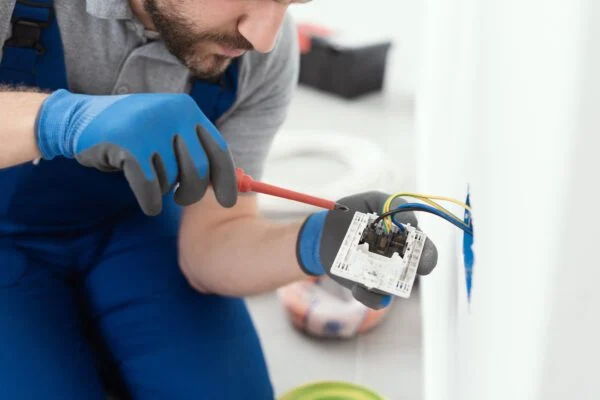
Burning smells that persist after the oven is fully up to temperature — not the normal smell of a new oven or the burning off of spilled food — can indicate wiring insulation degrading or an electrical component overheating. This warrants inspection before continued use.
For gas appliances, many homeowners in Oakville prefer to have any gas-related component work handled by experienced professionals rather than attempting it themselves. The gas line connections in most homes are accessible but should be handled carefully, with proper testing after any work involving gas components.
Carbon monoxide is an invisible risk with gas appliances that aren't burning cleanly. If your CO detector activates when the oven is in use, that's a serious signal. Turn off the oven, ventilate the space, and have the appliance inspected before using it again.
Landlords and property managers across Oakville deal with appliance repair under a different kind of time pressure than owner-occupants. When a tenant reports a broken oven, there's a reasonable expectation of a prompt response — and Halton Region residential tenancy obligations support that expectation for essential appliances.
The challenge is coordinating a repair between tenant availability, part sourcing, and scheduling — all within a timeframe that's reasonable for both parties. Having a reliable residential repair contact who can respond quickly and work through the logistics makes this significantly easier to manage.
For rental properties, the age and condition of the oven matters to the decision of repair vs replace. A working appliance that needs a single part replaced is always the faster resolution. A unit that's been repaired multiple times and is approaching end of life may be better replaced between tenancies — which removes the problem from the tenant relationship entirely.
Explore our latest resources, guides, and helpful information.